An ADHD-Friendly Cleaning Routine That Doesn't Overwhelm
How to keep a beautiful home when your brain refuses linear lists — a low-stim, soft-structure cleaning system you'll actually use.
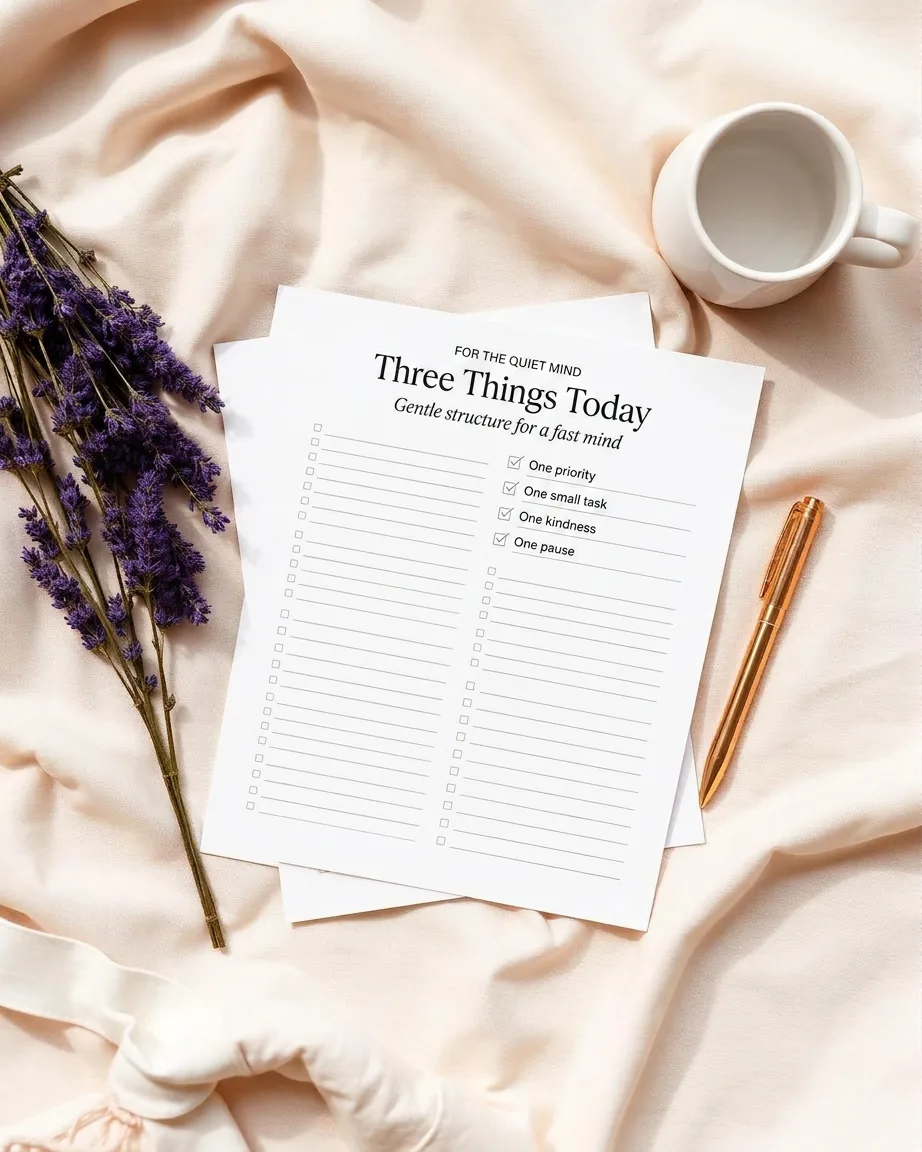
Why most cleaning routines are designed for the wrong brain
If you have ADHD, you already know the secret nobody talks about: a 47-item cleaning checklist is not a routine. It is a panic attack with bullet points. Most cleaning systems on the internet are written for linear brains — brains that can start at the top of a list, move calmly downward, and feel a tidy hit of dopamine at every checked box. ADHD brains don't work that way. We open the list, freeze, scroll, abandon. Then we feel guilty about the abandonment, which makes it harder to start the next time. The problem is not us. The problem is that we are using a tool designed for someone else's nervous system.
What ADHD-friendly structure actually looks like
ADHD-friendly cleaning is not about doing less. It is about designing structure that whispers instead of shouts. Structure that whispers feels like a soft prompt: a single card on the kitchen counter that says 'reset for 15 minutes — start with anything.' Structure that shouts is a printed Sunday deep-clean spreadsheet with 12 rooms and 47 sub-tasks color-coded by frequency. The first one we follow. The second one we hide in a drawer and feel bad about. After working with hundreds of women with ADHD, the pattern was identical every single time: gentle structure gets followed, rigid structure gets abandoned by Thursday.
The Quiet Mind System — three tools, not 47
We built the Quiet Mind System around three soft tools, designed to replace every dense cleaning list you've ever printed and quit. The first tool is a 15-minute reset card. The second is a zone-of-the-day rotation. The third is a body-doubling prompt. That is the entire system. No spreadsheet. No frequency chart. No 'monthly deep clean' guilt page. Just three small pieces of paper that quietly hold the structure for you.
Tool one — the 15-minute reset card
The reset card lives on your kitchen counter. It has one instruction: set a timer for 15 minutes and start with anything you can see that bothers you. Not the worst thing. Not the most important thing. The thing your eyes keep landing on. When the timer goes off, you stop. You don't have to keep going. Most days you will keep going anyway, because ADHD brains love momentum once they finally start — but the permission to stop is what gets you started in the first place. The hardest part of any cleaning task is not the cleaning. It is the activation. The 15-minute card lowers the activation cost to almost zero.
Tool two — the zone-of-the-day rotation
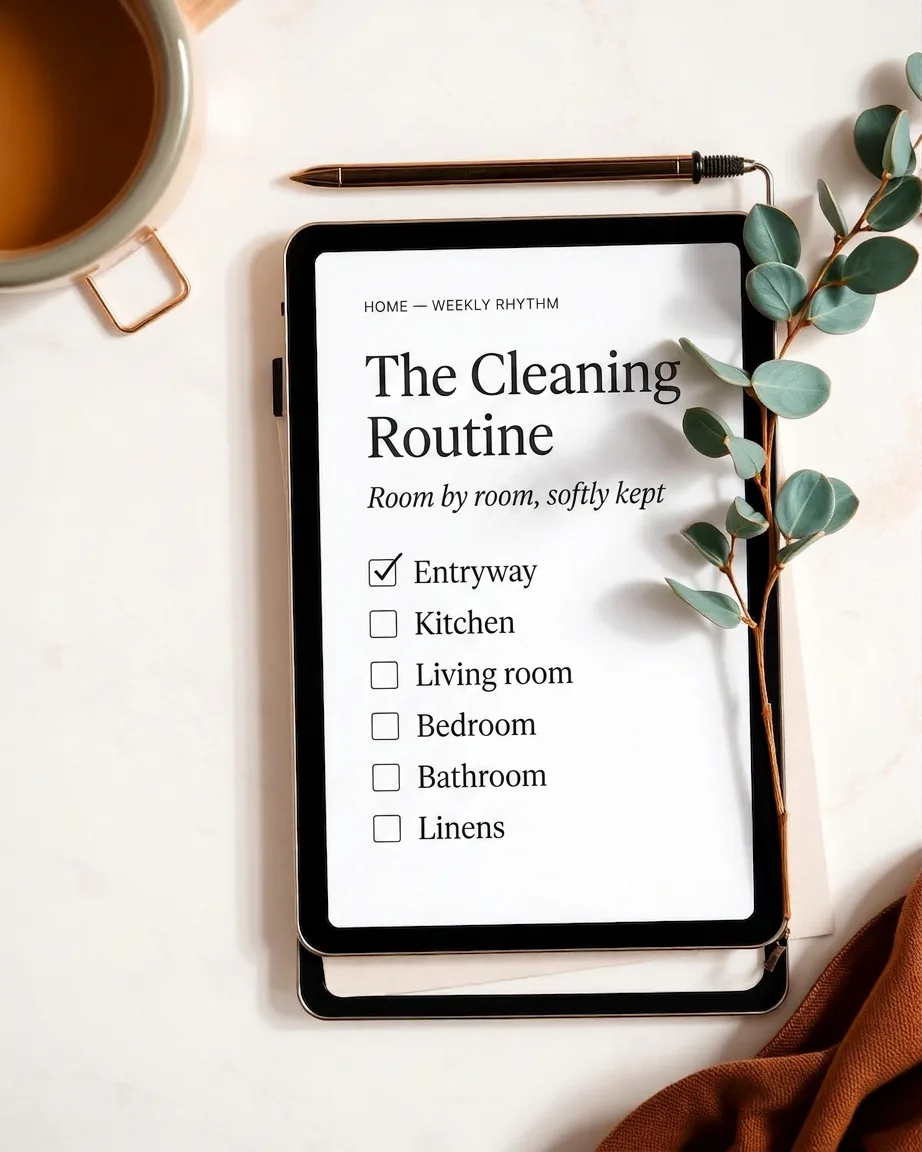
The zone rotation gives your week soft scaffolding without ever asking you to follow a strict order. Monday is kitchen. Tuesday is bathroom. Wednesday is bedroom. Thursday is living. Friday is entry and laundry. Saturday is gentle reset. Sunday is rest — fully, no guilt. You do whatever you have time and energy for in that day's zone. If you miss a day, you do not 'catch up.' You simply pick up wherever the rotation is next. Missing days is part of the design, not a failure of it. The rotation keeps the whole apartment moving forward even when individual days fall apart.
Tool three — the body-doubling prompt
Body doubling is the ADHD secret weapon: tasks feel easier when there is another body in the room, even silently. The Quiet Mind System turns this into a single printed prompt: 'What would feel like a gift to future me?' You read the prompt, picture future-you opening the fridge tomorrow morning or stepping into the bathroom tonight, and you do the one small thing that would feel like a gift. Sometimes that's wiping the counter. Sometimes that's putting away one stack of mail. The prompt bypasses executive function entirely by routing the decision through care instead of obligation.
Why generous white space matters for ADHD eyes
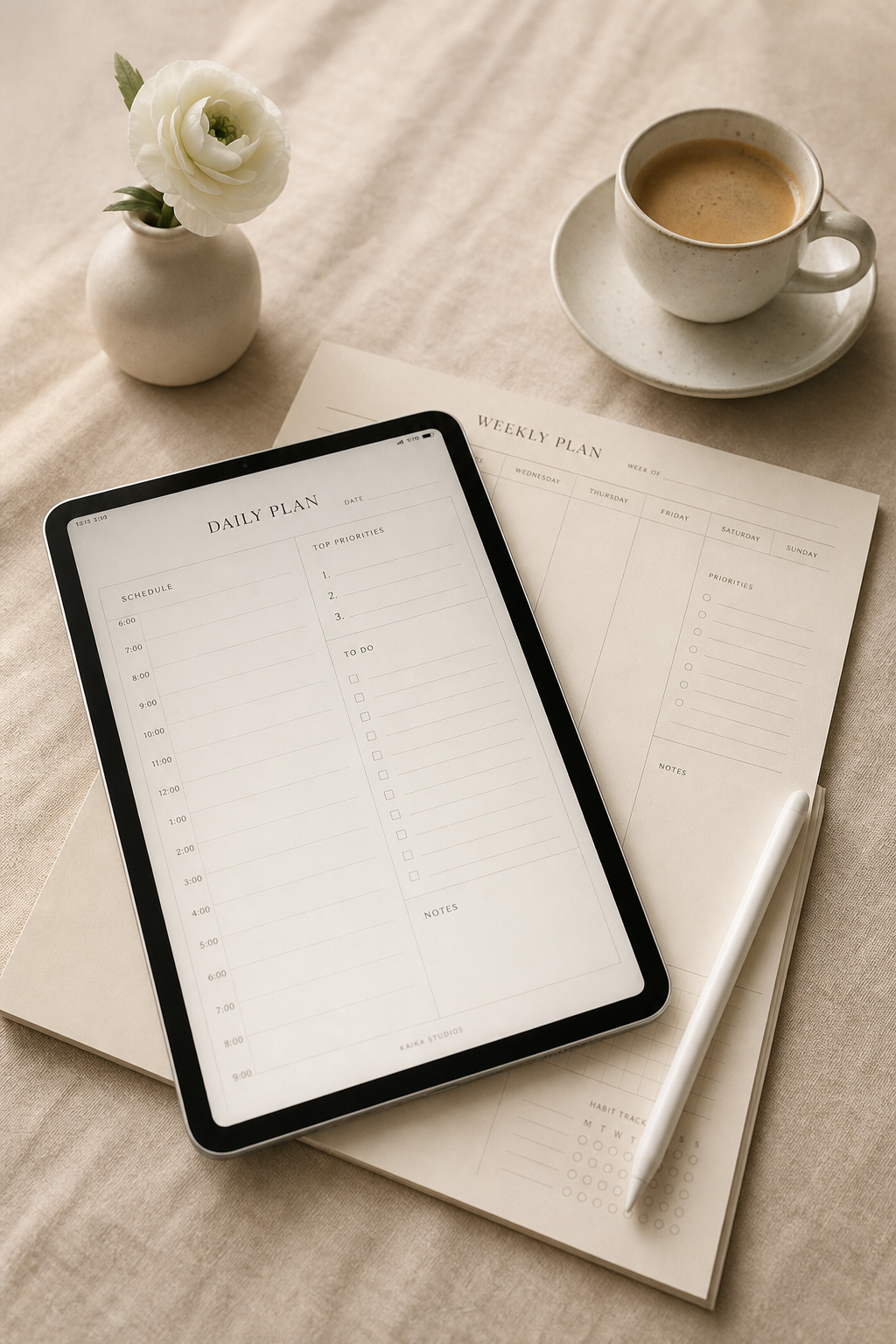
Every printable page in the Quiet Mind System is designed with deliberate visual breathing room. Generous white margins. Cream backgrounds instead of bright white. Serif headers in soft brown instead of harsh black. Small, calm type. The page is designed so your brain reads it as a quiet magazine spread, not a to-do list. This is not aesthetic for the sake of aesthetic. Visual noise is cognitive cost. For an ADHD brain already managing a heavy invisible load, a cluttered page is one more reason to close the binder and walk away.
What changes after a month of using it
Most women who switch to the Quiet Mind System report the same arc. The first week feels suspiciously easy — they don't trust that something this soft is doing anything. The second week they notice the apartment is in better shape than usual, without remembering doing more. The third week the 15-minute reset starts happening without the timer. By the fourth week the routine is invisible. It has become a quiet baseline. They are not 'doing cleaning' anymore. They are simply someone whose home stays kept.
A final word for anyone who has cried at a checklist
If you have ever opened a cleaning planner, looked at the dense grid of weekly tasks, and felt a small physical wave of dread — this system was written for you. You are not lazy. You are not undisciplined. You are running a brilliant, non-linear brain on tools built for linear ones. Gentler tools exist. You deserve to use them. And your home deserves to be kept by a woman who isn't quietly punishing herself for every page she didn't finish.
Create a calmer weekly rhythm
A gentle editorial system for women who want clarity, structure, and quiet ambition — without the overwhelm.