How to Build a Home Management Binder You'll Actually Use
A modern, editorial take on the household binders our grandmothers kept — and why every woman deserves one.
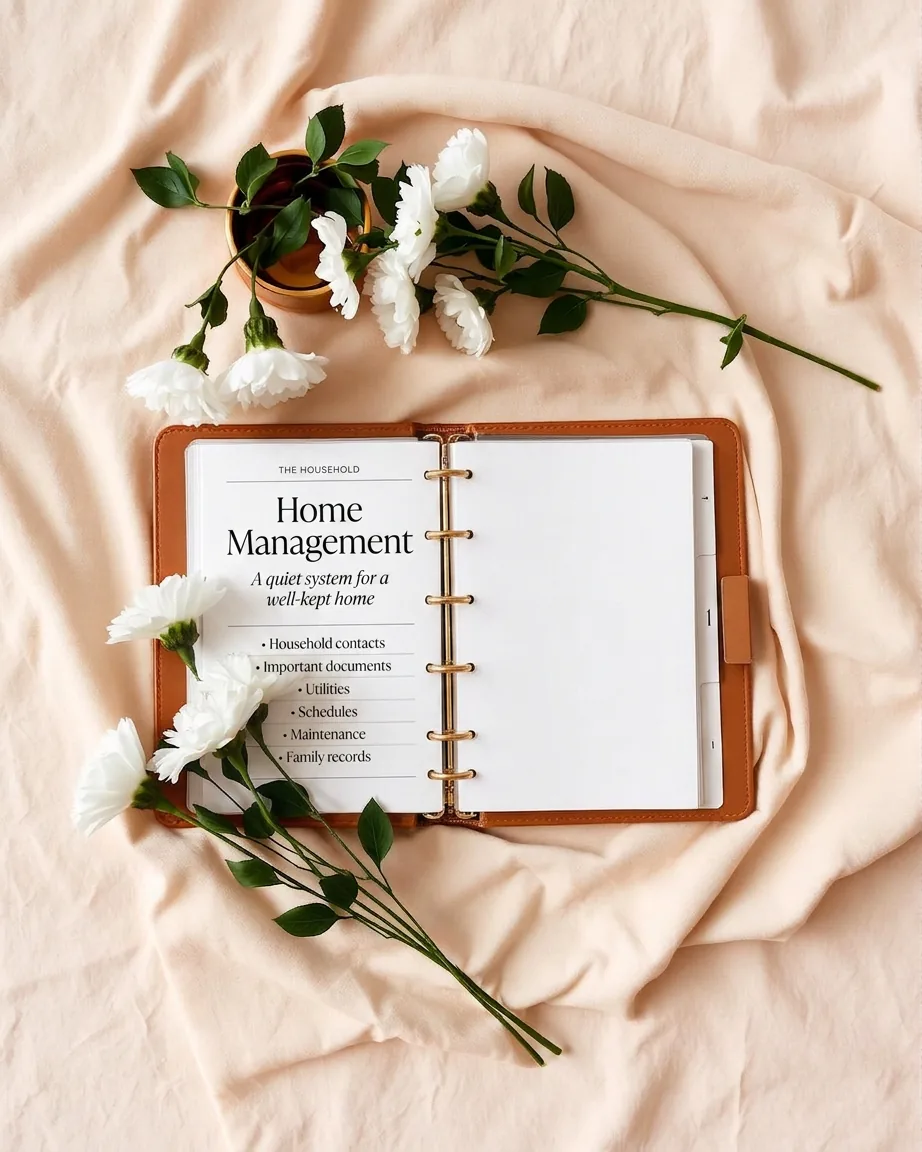
The single most underrated luxury of modern adulthood
A home management binder is the quietest superpower a woman can own. It is the difference between scrambling for the WiFi password during a power cut at 9pm with a guest standing in your kitchen, and opening one calm beige binder, turning to one tab, and finding it. It is the difference between dreading a tax appointment because nothing is in one place, and walking in with a single folder that holds every document the accountant could possibly ask for. Our grandmothers had these binders. They called them household books. They were not aesthetic, but they were sacred. Somewhere between the 90s and now, we replaced them with twelve apps, three cloud drives, and a vague sense that everything important is 'in the phone somewhere.' It isn't working. We can feel that it isn't working.
Why apps are not actually replacing this
Apps are excellent at the thing they each do. They are terrible at being the single place where your entire household lives. Insurance documents are in one app, WiFi credentials in a notes file, the children's vaccination records in a folder on Google Drive nobody else in the family can access, subscription renewal dates scattered across email confirmations from 2019. When something goes wrong — a power cut, a hospital visit, a leak under the sink, a stolen wallet, a death in the family — nobody can find anything quickly. A printed binder solves this not because paper is better than apps, but because paper survives a dead phone, a forgotten password, an internet outage, and the cognitive collapse that comes with real emergencies.
What goes in the binder — eight sections, no more
Our home management binder is built around 120 editorial pages organized into exactly eight sections. We tested twelve. We tested six. Eight was the number that covered real life without becoming a project. The sections are: Household, Family, Medical, Financial, Travel, Celebrations, Subscriptions, and a 'Just-in-Case' vault. Each one earns its place because, when you need it, you need it immediately and you need it offline.
Section one — Household
The Household section is everything that keeps the apartment running. WiFi network and password (printed, laminated, taped inside the cover). Landlord or property manager contacts. Building entry codes. Trash and recycling schedule. Plumber, electrician, locksmith, and cleaner contacts with hourly rates noted next to each. Appliance model numbers and the dates they were bought. Paint colors with brand and code for every room. Care instructions for any rug, sofa, or wood surface that needs specific cleaning. This single section saves you roughly forty googles per year.
Section two — Family
Family holds the human logistics. Emergency contacts in order of who to call first. Each family member's blood type, allergies, current medications, and dosages. Pediatrician, dentist, optometrist, and specialist contacts. School and daycare contacts with after-hours numbers. Pet vet, microchip number, and vaccination dates. A page for each child with sizes, favorite foods, current best friends, and current fears — useful for grandparents, babysitters, and your own memory.
Section three — Medical
The medical section is the one most women add only after an emergency forces them to. Don't wait. Copies of insurance cards (front and back). Recent test results. A timeline of any chronic conditions with diagnosis dates and treating physicians. Imaging summaries. Vaccination history for every family member. A blank symptom log you can hand to a new doctor. The hospital does not need this binder. You need it, at 2am, in a hospital, when someone with a clipboard is asking questions you cannot remember the answers to.
Section four — Financial
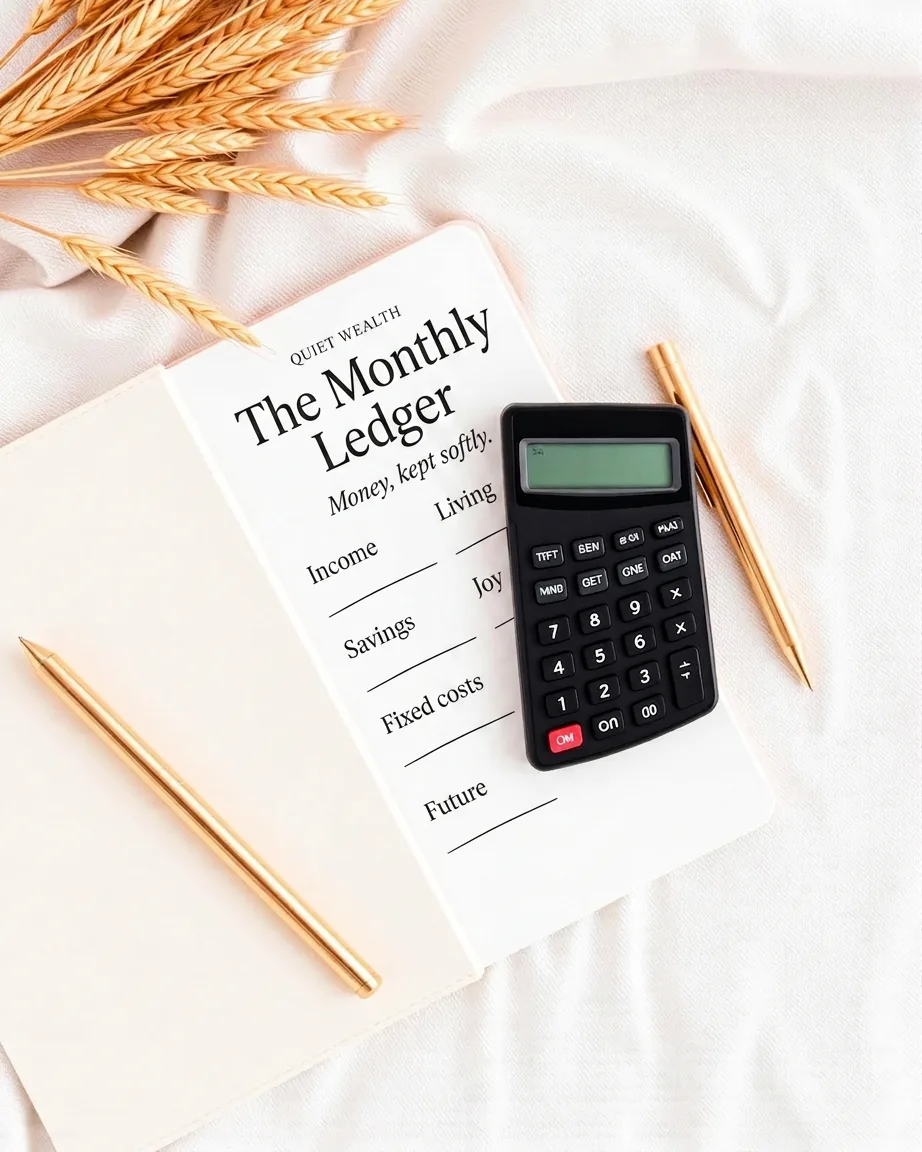
The financial section is not your accounting. It is your map. Bank accounts and the branch you opened them at. Credit cards with customer service numbers. Investment account institutions and login recovery emails. Recurring monthly bills with amounts and due dates. The location of the safe and who knows the combination. Insurance policies — health, home, life, auto — with policy numbers and broker contacts. Your tax preparer's contact. The lawyer who drew up your will, if you have one. The financial section is not for daily use. It is for one specific kind of week you hope you never have.
Sections five through eight — Travel, Celebrations, Subscriptions, Just-in-Case
Travel holds passport numbers, frequent flyer numbers, the contact for the travel insurer, and a packing checklist refined over years. Celebrations holds birthdays, anniversaries, the wine your mother-in-law likes, the children's gift lists, and a quiet running budget for the year so December stops being a financial ambush. Subscriptions is the single page that will save you the most money: every recurring charge, the renewal date, and the link to cancel. Just-in-Case is the section nobody wants to write — important documents location, will location, account access for a trusted person, funeral preferences. It is uncomfortable to make. It is also the most loving gift you can leave behind.
How to actually fill the binder without it becoming a project
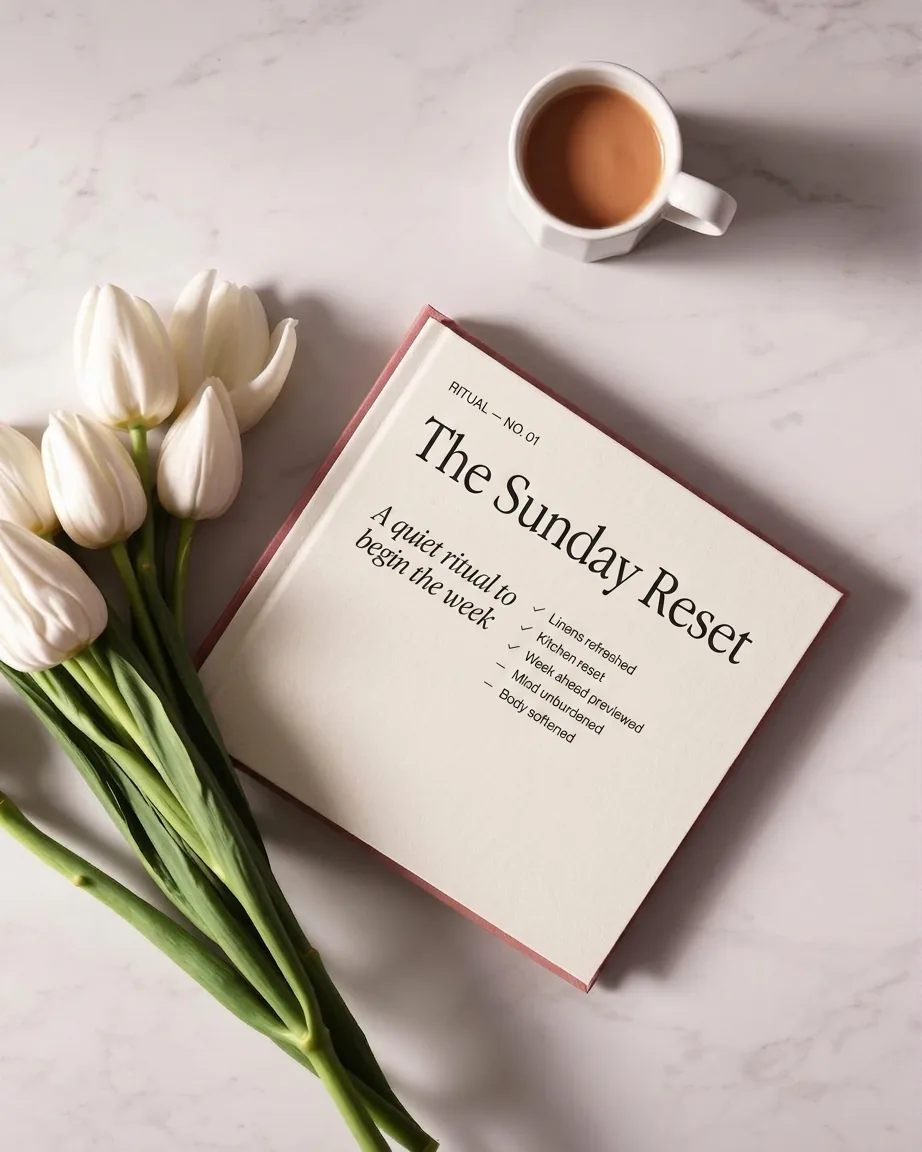
The biggest mistake women make with a home management binder is treating it like a weekend project. It is not. It is a Sunday-evening ritual, done in 20-minute sips over four weeks. Week one: print the binder and fill out only the Household section. Week two: Family and Medical. Week three: Financial and Subscriptions. Week four: Travel, Celebrations, and the Just-in-Case vault. After that, you do a quarterly update — one Sunday afternoon every three months — to refresh any sections that have changed. The whole maintenance budget is about two hours per year.
The aesthetic isn't decorative — it's why you'll keep using it
We made the dividers in champagne and cream. The cover sheets are set in our signature Cormorant Garamond. The page corners have soft botanical illustrations. None of this is decorative for its own sake. We designed it this way because if a binder is ugly, it lives in a closet. If it is beautiful, it lives on the kitchen shelf where you'll actually open it. The binder that gets used is the binder that gets seen.
A final word on quiet preparedness
There is a particular kind of confidence that comes from knowing exactly where every important piece of your household lives. It is not paranoia. It is not control. It is quiet preparedness — the feeling of being a woman whose life is held together with intention rather than improvisation. Print the binder once. Update it on a Sunday every quarter. It will outlast every app on your phone, every cloud service that quietly shuts down in 2031, and every moment of crisis where you needed the answer and didn't have time to search for it. This is the binder our grandmothers kept. We just made it beautiful enough to deserve a place on your counter.
Create a calmer weekly rhythm
A gentle editorial system for women who want clarity, structure, and quiet ambition — without the overwhelm.